Maintaining logins and comments on this site long ago became quite difficult, and it hasn’t become any better. And the WordPress post creation/editing UI is really awful. So I think I’m migrating to substack:
It seems clear that there are conflicts where one doesn’t. To take a recent example, the question of trans women in women’s sports and locker rooms. I personally don’t have a dog in this fight, not being a woman, trans or otherwise, or the operator of a locker room, and not having the slightest interest in sports. On this topic I don’t think I’m obliged to take a side.
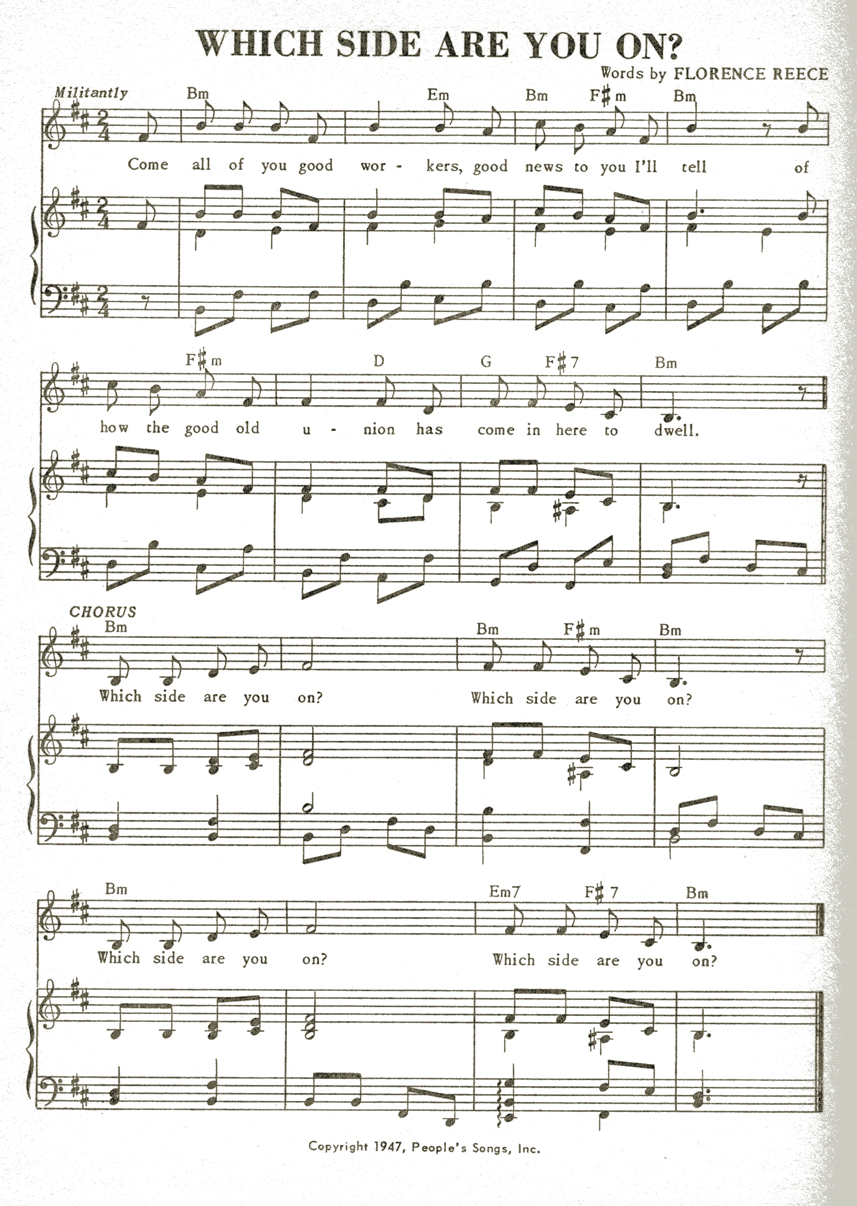
On the other hand, it’s not hard for me to think of situations where I think side-taking is obligatory, or rather, perhaps, unavoidable. Do you think women are the political and social equals of men, or not? Is it really possible to avoid this question? To take some historical examples, Hitler or Stalin? Union or Confederacy? Union or management?
These examples will suggest that the choice is seldom between jet-black hats and snow-white hats; even the chosen side may be, in the current cant phrase, “problematic”. Even so I would argue that sometimes it must be made. Sometimes, but not always.
(Another counter-example: Republicans versus Democrats. Here I have no hesitation in saying that no choice is compulsory, and indeed that any choice either way is discreditable.)
Sometimes you have to make a choice because your choice will affect events, and you have to do something; inaction is, in effect, a choice. For a doctor to choose a treatment, or a sailor to choose an anchorage, will sometimes determine whether the patient lives or dies, or the boat sinks or swims. (This situation, by the way – where one has some degree of real control — is where the “lesser evil” argument actually holds true.)
For most of us, though, and especially for choices of the substantive political kind – I mean substantive as opposed to Republican/Democrat, that is, they’re about something intrinsically important — our choice will have little or no effect on events. For most of us, for example, choosing to be a Ukraine fan or a Russia fan will have no effect on events. And yet we think it’s important; whichever side you choose, the importance is agreed.
Perhaps the difference is simply in the importance we assign to the outcome, even if we can’t affect it. I don’t think anybody would deny that the outcome of the Russia-Ukraine war will be important. As I would phrase it, that outcome will either be a victory or a defeat for the ultimate instigator of the conflict, which is of course the US and its sockpuppet NATO. Give me that choice, in the actually existing world, and I’ll always choose a US defeat. I mean, every time.
People on the other side would talk about “international law” or some other chimaera, and bless their hearts, as we say down South.
Typically, I find, people taking the opposite view stress the relative whiteness of the two hats – though the Ukie hat has a distinctly dusky hue, and so this side of the equation is seldom insisted upon; rather, the sable tint of the Russki hat comes under the moral spectroscope.
As if it were our job (rather than, say, God’s) to decide who’s more righteous, and choose our side on that basis.
I suspect that this moralizing perspective comes into play largely because people don’t want to think about the outcome, or rather, they don’t want to think about which outcome they really prefer, or they don’t want to be bothered with the history and the context. It’s all about schoolyard rules: Who threw the first punch?
In a sense, the cynical neocons are rather refreshing this way. They’ll tell you, quite candidly, that they want the US to rule the world in saecula saeculorum, and that’s what this is about, and screw you if you’re not down with it. So they are, you might say, the negative inversion of me. Hence really quite comprehensible: they’ve chosen a side, based on what they want to happen, and so have I, on the same basis, and the considerations we’ve both taken into account are much the same, except for the sign reversal.
The moralizers have also chosen a side, more or less by default, but either they’re less honest than their de-facto allies, the neocons, or perhaps less self-aware. Factually, to defend the Ukes is to defend the US empire, clearly an outrageous stance, so the whole thing needs to be lobotomized (no history or context please) and transferred from the plane of consequential reasoning to the Alpine slopes of abstract principle. Where the air is pretty thin, and the reasoner’s crampons need a purchase on the ice of fact but would rather call on a philosophical sky-hook.
Doesn’t work though. “Who threw the first punch”, though perhaps not very important, is still a factual question, as is “what led up to that?” Ask the one and you can ask the other. The first-punch theorist will reply that not throwing a punch is a moral absolute whereas provoking a punch is not, but this just makes him look silly, at least to anybody who really tries to do moral reasoning, rather than just moralizing about it.
So perhaps the answer to my original question – when is side-taking needful, and when is it not – comes down to the pedestrian subjective question “What matters to you?”
Returning to the locker-room question, its answer matters, clearly, to people who do have a dog in the fight, and of course they’re going to choose a side, and should do. There’s also a penumbra of people professionally or personally committed to gender theory, summed up in the slogan “trans women are women”; for them, the open locker room is an ideological victory and the closed one a corresponding defeat; so they have a dog in the fight too, though a different breed of dog.
Then there’s a further penumbra of people – both on the Uke question and the locker-room question – who are mostly concerned with attitudinizing and showing team spirit about the topics currently trending in their reference group. But that’s a topic for another post.
Shows what a weak reed the credentialling sector ultimately is. New College was founded at the heart of the postwar Golden Age, when elite consensus was what we would now call “liberal”. Well, it’s not any more, so all State institutions are going to bend the knee. Amazing in a way that NC lasted as long as it did. The possible upside: it will give the youngs something more consequential to fight for than gender categories and pronouns. If they take it. I wonder whether they will. On my reunion visits I found them likable but utterly shipwrecked intellectually by wokeness.
The New Left in our day had an iron backbone of red-diaper babies — sons and daughters of old Commies from the 1930s. They were having an Oedipal drama with the ‘rents on the Old Left — which had, admittedly, pretty much collapsed and sold out to the Democratic Party — but they inherited some of its materialist clarity of thinking and historical awareness. But now the New Left has been replaced by the No Left, which has no conception of class at all, as far as I can tell, and reduces politics to an extensive list of bad attitudes — racism and misogyny of course in a very expansive sense, and then the zoo of Xphobias (replace X with trans-, homo-, etc.).
It will be interesting to see how the crackdown unfolds. A new president, presumably, in fairly short order. Who will then issue directives to do, or not do… what? And it will be interesting to see whether there’s any real resistance. Pessimistically, perhaps, I doubt it. Profs are not usually made of very stern stuff.
Economics is a topic that vexes me. Even among lefties a training in this pseudo-science always seems to lead to a curious dogmatism. You ask what seems like a simple question and often as not, you get some canned answer that suggests the question hasn’t even been understood. But then perhaps my simple questions are simply imbecile.
Something I’ve been pondering lately is the topic of what capital has to do out of existential necessity, as contrasted with what it likes to do if it can. (Life process vs immanent tendency, let’s say.) This seems to me like a useful distinction.
For example, my comrades all assure me that Marx proved capital must expand or die, but nobody has ever been able to lay out for me the steps in this theorem. Empirically, of course, we find that it has a strong immanent tendency to expand, but if my distinction holds water, that’s not the same thing.
And then of course we also find it has a strong immanent tendency to destroy accumulated capital, war being the locus classicus.
As far as I can see, there’s no obvious reason why capital couldn’t get along just fine even under some fairly strong legal or regulatory or tax constraints. (This should not be misread as a defense case for capital, by the way; I’m as eager as the next comrade to see the end of it.)
As far as I can tell, the problem is really political, not technical or essential; with capital in the driver’s seat, who’s in a position to impose such constraints? Or motivated to do so? Corollary: If someone were in a position to impose those constraints, what would be the point of keeping the capitalists around?
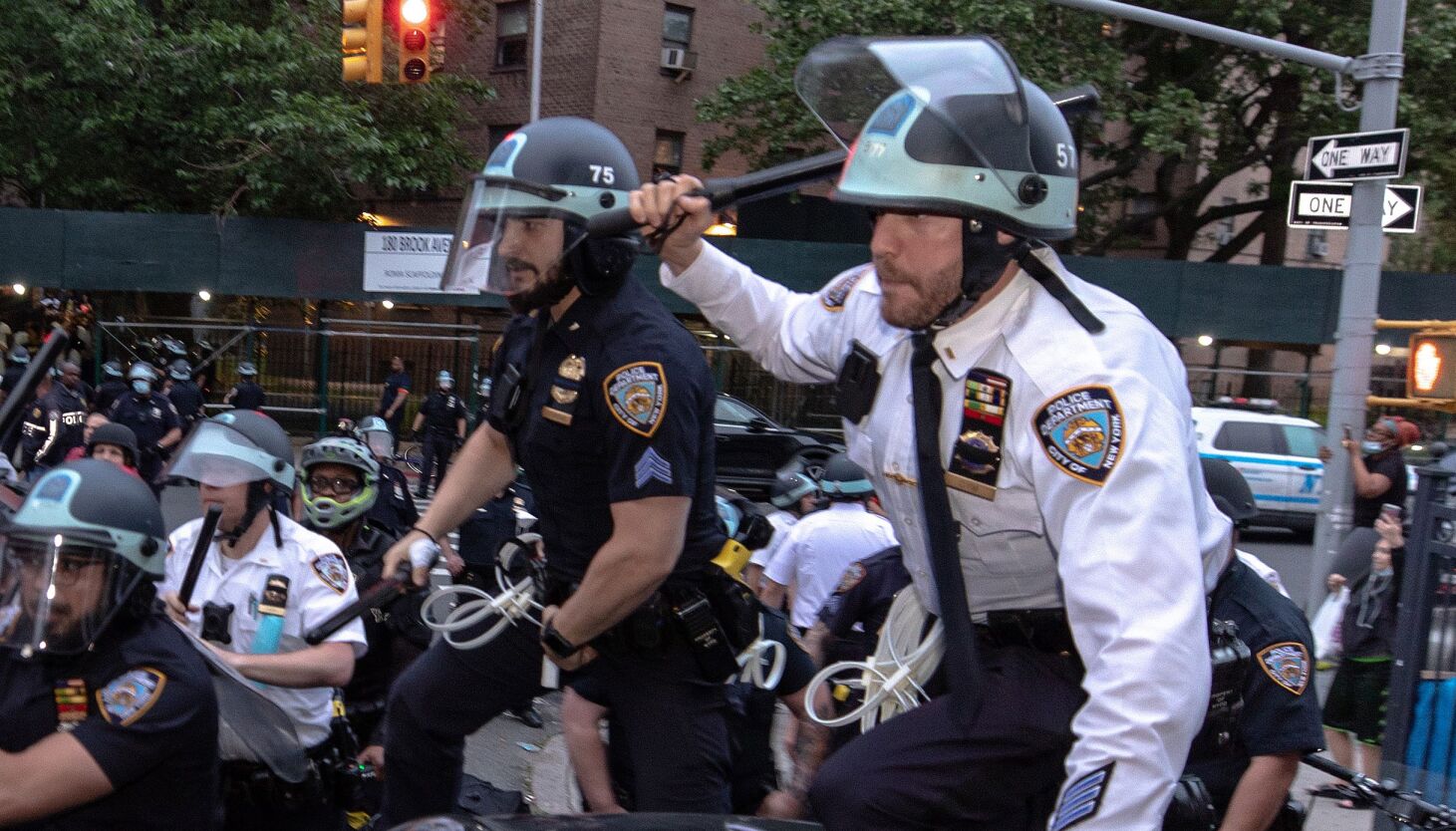
To me, the sight of a cop in his brutish ugly uniform and his panoply of weapons is purely bad. The badness is a composite of fear (I really don’t want to attract his attention) and hate (why is he there at all, and why so heavily armed), and I wish somebody would take him out, or at least pin him down under covering fire and make him cry for his mother and wet his cop pants.
Others feel otherwise. Obviously. I wish I understood them better.
To me, the menacing cop looks like a menace. I mean, a menace to me.
To the cop fans, the cop also looks like a menace, but to somebody else whom they fear and loathe. Who might that be?
The obvious answer is “black people”, and there’s no question that in the US, at least, this is a big part of the picture. But then there are black cop fans too, and I think that race (though it can never be overlooked) isn’t the whole story.
The cop is plainly an object of fear, so to stan him implies that there’s someone – real or illusory – whom we fear worse, and against whom this horrid Talus might be turned.
Is that someone perhaps some part of ourselves? Is the cop the heavily armed external superego, keeping our own unruly Id in line? The personification of a punitive social order, whose rules & regs we have to obey, and are expected to love? The cop can be for us, or against us, depending on which side of us turns up. Better for than against, considering his heavy armament. Better to love him than hate him. Identify with him, or he might gun you down.
But that leaves some Id left over, and so there’s another Other too, namely all those people out there – black people (or for boogie black people, Cousin Pookie); unruly people, undeserving people, those who didn’t do their homework or got bad SATs or “made bad choices”. We who have more or less “made it” under the rules have implicitly constructed these Others onto whom we have projected our own anarchic Id, the thing that makes the cop dangerous to us. They become the externalized internal enemy. Go get ‘em, Officer!
Once you’ve gunned them down, no way that Id will rebound back onto respectable Us. And of course, no way will we have to worry about you.
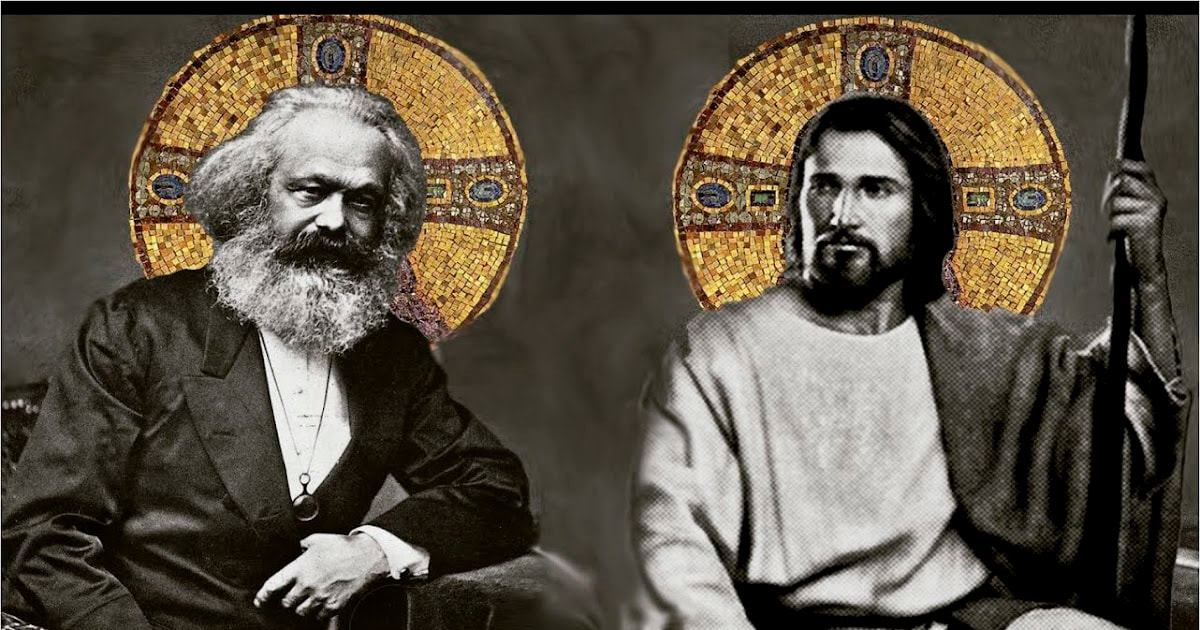
This is a topic that has always interested me, as a high-church, liturgically and theologically conservative, Episcopalian Commie. (In fact my current tragedy is that my old mother church has become too liberal for me, but has never been left-wing enough.)
I personally have never found any contradiction here. I’m not an especially good Communist, or an especially good Christian, but to the extent that I’m either, they’ve never seemed to pull me in different directions. He hath put down the mighty from their seat, the remarkable Lady sings, and hath exalted the humble and meek. Sounds pretty Commie to me.
Jacobin’s writer seems to be asking, Why shouldn’t a Commie be a Christian?
Well, there are reasons. Start with the fact that the great sages were atheists – Marx, Engels, Lenin, and so on. So how can one be an admirer and follower of theirs and yet not an atheist?
One obvious answer is that our admiration for Marx et al. is not fideistic, it’s, well, empirical; on matters of political economy and politics and history they seem to have got a lot of stuff right. When they ascend to metaphysics, they run the usual risk of hypoxia. So these great men are not Moses, charged with tablets from Sinai, but fellow-enquirers with us, like Newton or Darwin. They’re not a package deal. This is not meant to endorse a cherry-picking eclecticism, but to suggest that every reading, however respectful, of the Greats, Marxist or not, is also an interlocution.
There’s another, perhaps more serious obstacle: the default position for self-respecting college-educated people in North America and Western Europe these days is to be an atheist; the alternative is more or less an unthinkable gaucherie. One has to be very contrarian to take it up. I dare say that most Marxists in my world were atheists long before they were Marxists. And why should an atheist ever change his mind, absent some extraordinary road-to-Damascus thing? Atheism is a perfectly respectable and consistent position, after all; and it’s really implicit in modernity.
So I would turn Mr Jacobin’s question around, and ask rather, why shouldn’t a Christian be a Commie? I think I could convert Christians to Communism more readily than most Communists to Christianity – because Christianity is basically a tough sell, as St Paul observed some years ago, but Communism is just good common sense.
For religious people – not only Christians, but religious people in general — there’s the “baggage”, of course, that Commies are supposed to be atheists. I think this is easily disposed of. In politics as in religion, start with the praxis and the theory will, over time, make itself clear. Believers can easily, and do easily, make common cause with non-believers on some agreed-upon project. And a lot of believers started coming to church with mental reservations – consider the famous joke about Episcopalians crossing their fingers when it’s time to say the Creed. So they’re used to this, and they have the mental apparatus to dip their toes into Communism “except for the atheist part”. Some of them will find the water fine.
Lemma: the atheist Commies mustn’t insist on atheism as a requirement. And indeed, I can’t think of any way that Marxism or Leninism requires atheism qua axiom – falls to the ground without it.
The substantive ideological obstacles to Communism, for religious people, aren’t often specifically religious ones; in fact they’re usually irreligious ones, and lie in commonplace secular ideological notions about the nature of the State (liberal representative democracy, due process, rule of law, tyranny of the majority, all that mythology) or human nature (sociobiology and all its hellspawn).
In the US, at least, the curious sociological fact is that a lot of the people that us Commies would like to recruit – in fact, the social base we’re meant to depend on — are self-identified Christians. The atheists are all PMC and therefore hardened liberals. Not quite beyond Communist redemption, perhaps, but the parable of the camel and the needle’s eye (mutatis mutandis) does come to mind.
In fact, if 10% of Christians could be brought round to Communism, that would be (at least numerically) a bigger deal than 10% of Commies becoming Christian. Because there are a lot of Christians, and very few Commies, I’m sorry to say; I wish there were many, many more.
So by pure chance I picked up a copy of The Deficit Myth, by Stephanie Kelton. I suppose this is the Bible of Modern Monetary Theory (MMT). I’m totally convinced, although various puddleglums (sometimes quartered in surprising corners of the swamp) assure me that it’s snake oil.
I recommend the book to those who have heard the brouhaha about this topic. Go to the source; don’t just believe what the doomsters tell you. You may or may not be convinced, but the book is lucid and plain-spoken, and it disposes briskly of most of the canards on this topic.
Let’s begin with the limitations. Kelton acknowledges that the limit of sovereign money-printing is unacceptable levels of inflation. That is, MMT (at least Kelton’s version) doesn’t claim that greenbacks can roll off the press ad infinitum. Her claim, rather, is that deficits as such don’t create unacceptable inflation ipso facto and that much depends on the state of the economy in general and, more specifically, on where the deficit spending goes.
She notes, accurately, that even official economics allows as how some degree of inflation is OK (2% seems to be the canonical benchmark).
She’s very good and eloquent on how central banks worry a lot about how bad inflation might happen and dial up unemployment just in case, even when bad inflation is not happening. One has to wonder whether there’s some other agenda here.
She’s brilliant on the false analogy of household finance – clearly, a sovereign who can print money is not in the same position as a household that can’t. Yet precisely this false analogy absolutely dominates ordinary political discourse – balance the budget, living beyond our means, all that crap.
I wonder whether, as in the Populist days, the question doesn’t come down to hard money (beloved by creditors) versus easy money (beloved by everybody else). Two percent inflation is OK, grudgingly, for the creditors, at the cost of high unemployment (not so popular with everybody else).
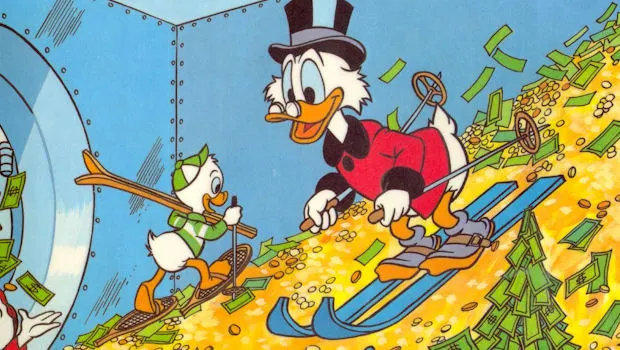
Thought experiment: What would monetary and fiscal policy look like if nobody cared much about creditors, apart from giving them a basis point over inflation or two? What are they going to do with their money except invest or lend it, on whatever terms they can negotiate? Do the Scrooge McDuck thing, convert it to specie, and roll around in it?
Bless ‘em if so; if they sequester their assets (“thesaurization” is the term historians use) and don’t spend them, that gives even more scope for non-inflationary public expenditure, hopefully directed to more constructive ends than the vain consumption of the frivolous rich.
Of course, dear Naso, you’d have rather not Been sent to Pontus; liked your metro life, Especially your amazing metro wife; Friends, fans; it really sucks to be forgot,
And hence your whingeing letters. Stir the pot, Perhaps amid the never-ending strife In Court and forum, there among those rife Factions and interests, you might have a shot.
But I suspect that Pontus ain’t so bad. I bet you’ve found who serves the best street food, Down by the harbor. Who can be too sad,
With such grilled octopus? I know you, dude; Metamorphosis – that’s your thing, my lad; Pontus a new adventure, be it ne’er so crude.
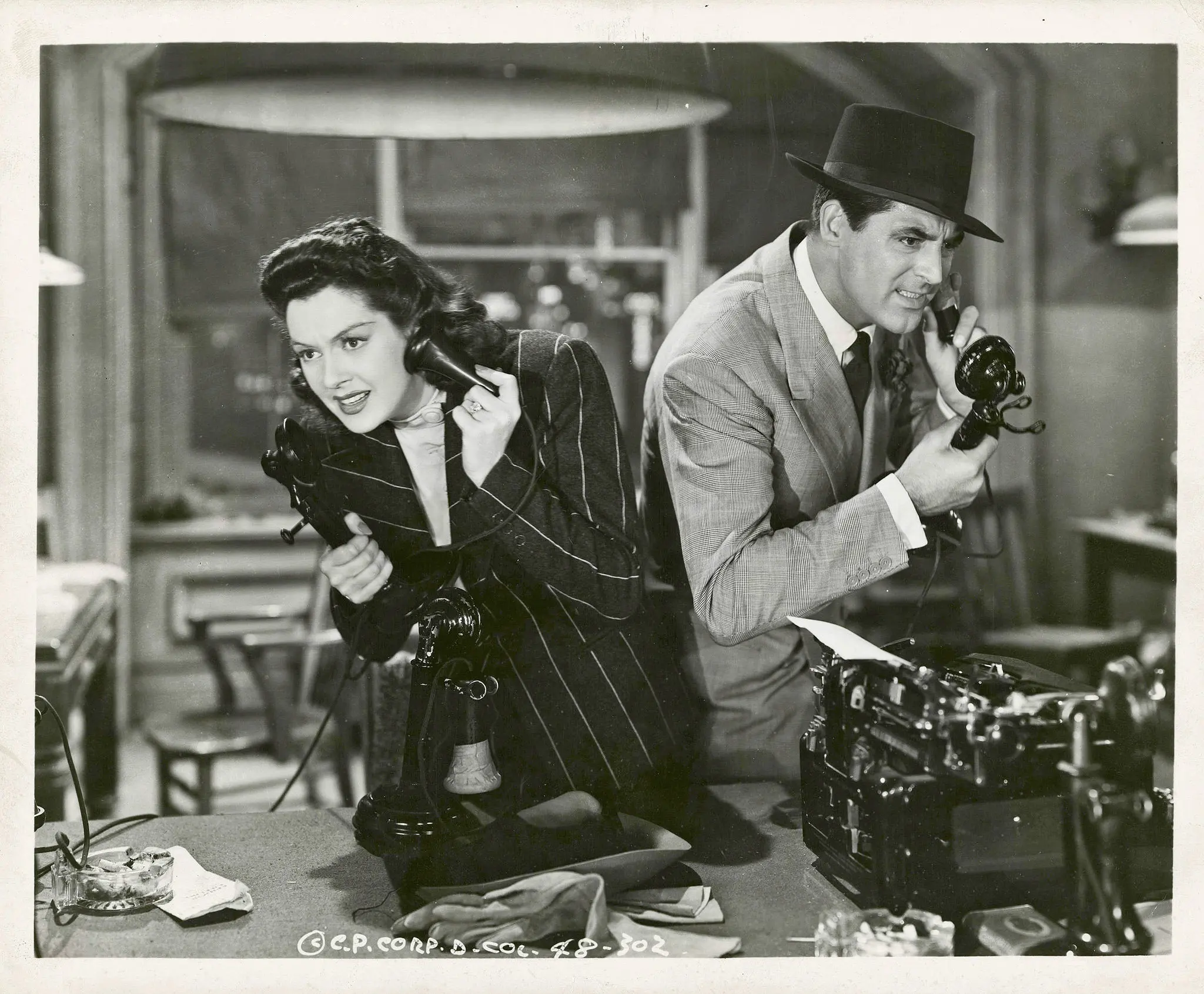
The concept of “journalist” needs some examination.
These are people who used to be called “reporters”, a term which has the merit of describing what they actually do, or are supposed to do, anyway: namely, find stuff out and report it.
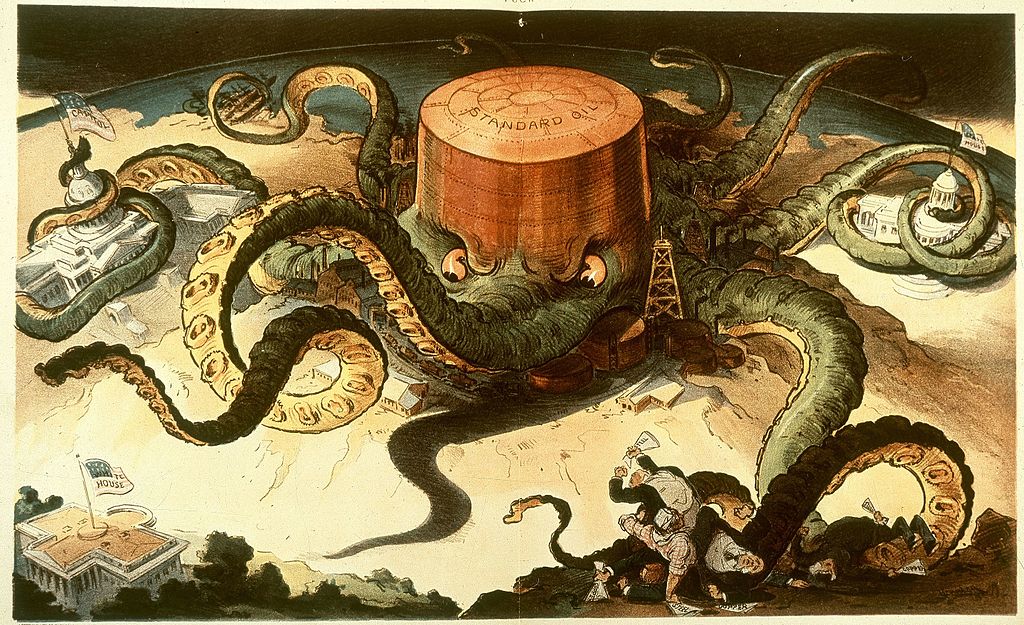
But as usual, we get title inflation, so something called “journalism” is invented. And as usual, it becomes credentiallized and professionalized. Columbia University (“the Octopus”, as we neighbors call it) has a School of Journalism, and no doubt other diploma mills have one too.
Now terms ending in “-ism” generally denote religions (Buddhism) or ideologies (Communism) or practices (Onanism) or medical conditions (Daltonism). Which of these is “journalism”? Somebody who worships journals, or believes in journals, or does journalling, or suffers from it?
For that matter, what’s journalling? I mean, if it’s not just reporting?
There’s a good deal of argument about who’s a “journalist” and who isn’t. Assange is, or isn’t, depending on who you ask. Ditto Greenwald and Taibbi. Everybody seems to agree that ole Marse Tom Friedman is a journalist, though, and everybody agrees that Woodward and Bernstein were the patron saints of the guild. (By contrast, it’s a bit easier to know who’s a reporter: Does he report things?)
Which brings us to the question: Why is it important to know who’s a journalist and who isn’t? Are journalists allowed to do things others aren’t, the way people with a driver’s license can legally drive a car and people without can’t? Are journalists subject to some Hippocratic code? If so, it’s hard to know what its rules are. Assange, for example, was attacked for not selecting and redacting material, and Taibbi is being attacked for the opposite. Woodward and Bernstein had sources they wouldn’t disclose, and this is thought to be praiseworthy, or at least OK, though it seems a bit sketchy to me; but Taibbi, who has been quite open about how he got the stuff he’s reporting, is excoriated for depending on a known source.
So it would appear that a journalist is a reporter you like, and a non-journalist is a reporter you don’t.
I’m a “tech worker” myself, at least when I can find work, but I applaud this development.
The layoffs Jacobin seems to be whingeing about here are all in the frothy and wildly overstaffed VC-funded sector, with its epicentre in San Francisco. These people are long overdue for a big takedown, and if it’s finally happening, well, bring it on.
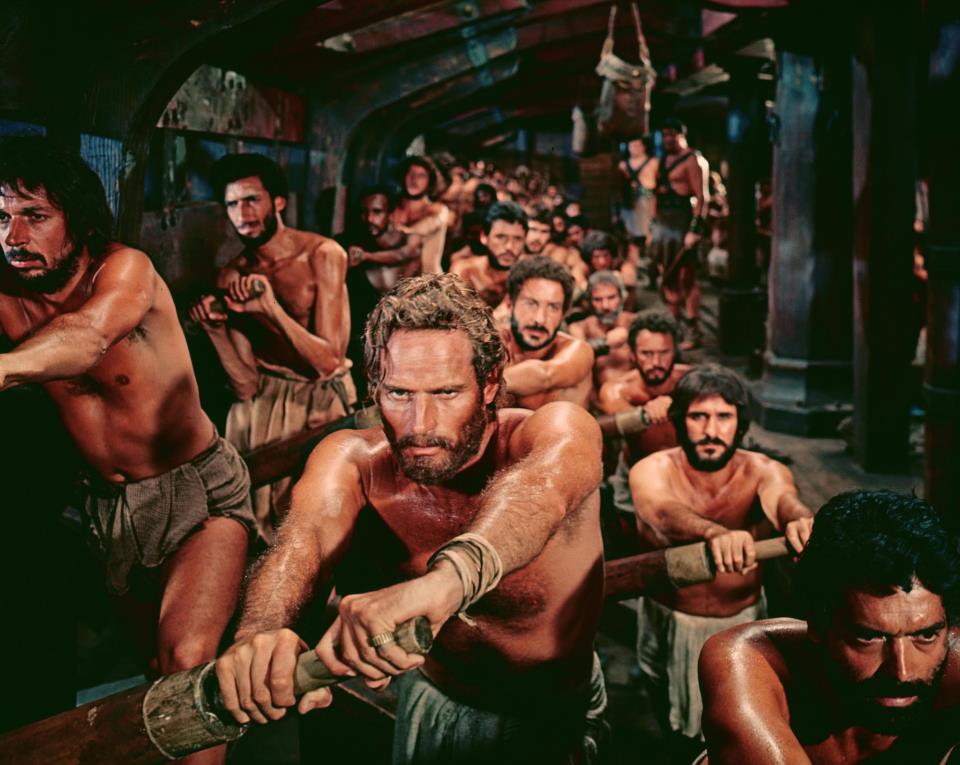
The sort of jumped-up junior Poindexters who work for the likes of Twitter and “Meta” are a far cry from the ‘umble drudges like myself who do galley-slave programming in the bowels of Bank Of America vel sim., which is just what most of us “tech workers” do. At the moment, anyway, hiring is pretty robust for these galleys, and the rates aren’t bad, though they don’t compare with lawyers or psychoanalysts. Still, you can make an OK living at it.
Silicon Valley is another matter altogether. The speculative overvaluation (and insane burn rates) of the companies themselves leads to a speculative overvaluation of “rock-star” programmers, both in the market and in their own poorly-socialized minds. I’ve met good programmers and bad ones, but I’ve never met a rock star, and frankly, I don’t think there are any. It’s a very mundane job. Writing good code is mostly a matter of putting in the time — and, of course, giving a shit.
So if all these Silicon Valley boy-bands get disbanded, I won’t shed a tear, even though the former rock stars will be competing with me for a place on the lowly rowing bench.