
Quomodo ceciderunt

IMG_1226wrt07246AucNYPLion

When I first came to New York, in 1978, the place was a shambles. My favorite graffito from the period read, ‘Will the last person to leave New York please turn off the lights.’ This louche silver-age postdiluvian feel suited me fine.

I spent a lot of time, in those days, in the building that everybody thinks of when they think of the New York Public Library: the grand Beaux-Arts Astor/Tilden/Lenox palazzo at Fifth Avenue and 42d Street, a cross between the Baths of Caracalla and the Palais de Versailles.

It was shabby, behind the grandeur. All the librarians had been there since the Pleistocene, and the only way to get a civil response from them was to ask a question they hadn’t heard before. They were almost indecently grateful for something new.

There was no air-conditioning. None. The frescoed ceilings were rotting away, and little flakes of paint — no doubt highly toxic — would land on your head as you bent over volume 103 of Migne, trying to decipher Chrysostom’s Greek under the mildew on the pages.

Books were brought up from the souterrain on a clanking conveyor-belt system, dating, I would guess, from the 1920s, and your call slips went to the hellions below in a pneumatic tube.

Neverthless, volume 103 of Migne, foxed and moldy as it was, always showed up, after half an hour or so. And above the entrance to the main reading room were carved, in faded gilding, old Johnnie Milton’s wonderful words:

Many a man lives a burden to the earth, but a good booke is the pretious life-bloode of a master spirit, embalm’d and treasur’d up on purpose to a life beyond life.

How it lifted my own spirit — not a master-spirit, but a susceptible one — to see that. Every time.

The words are still there, and they’ve even been brightly, glaringly re-gilded, but they’re a mockery now. The books, like Elvis, have left the building.

Oh, there might be a few thousand left. If you request a book that everybody else wants to read, you’ll only have to wait until a couple of other people are finished with it. But if you want volume 103 of Migne — or anything equally recherche — you will be told that the book is ‘offsite’. You’ll be told to put in a request for it, and come back in a week or so — if they can find it in New Jersey, or wherever it’s been sent. And as often as not, they can’t.

In any case, after a week, you don’t need it any more.

It’s going to get even worse, or so I’m told by the Chronicle Of Higher Edumacation:

As of today, New York’s great public research library stands virtually empty of books, its seven levels of recently refurbished steel stacks supporting the magisterial Rose Reading Room but just days away from removal, at a price publicly unrevealed and perhaps not yet precisely known even to Marx and the trustees. Indeed, The Wall Street Journal recently quoted one of the engineers hired to remove the stacks as likening his task to “cutting the legs off the table while a banquet is taking place.”

I’m not quite sure how a room can be ‘magisterial’, but what do I know? Anyway, the writer of this piece is on the side of the angels.

There were lots of un-lovable things about the old decadent degenerate New York, but the glossy new shell, with nothing inside, is not an improvement.
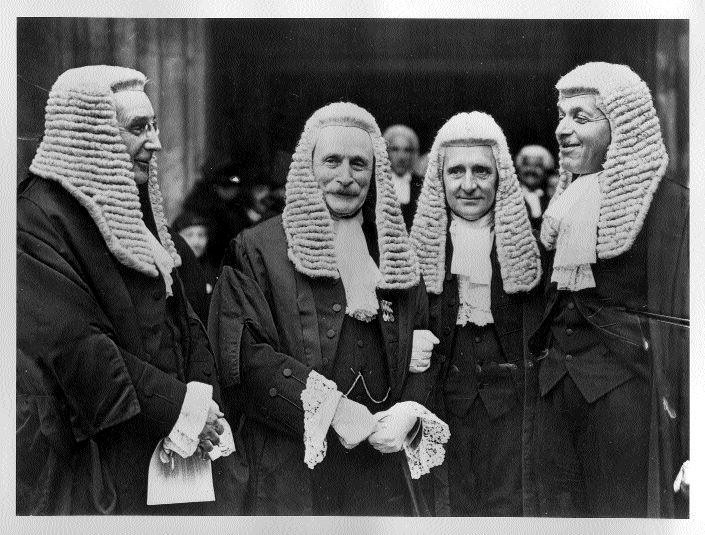
The courtroom, the nuptial chamber, the voting booth

judges

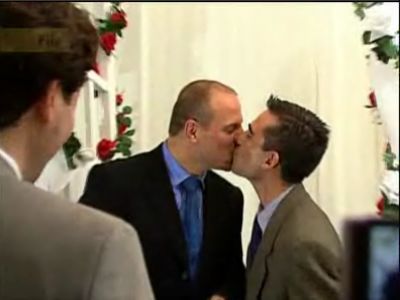
So there’s good news and there’s bad news. The good news is that anybody can marry anybody in a lot of places now, regardless of his and/or her abdominal plumbing, should the anybodies choose to do so for whatever reason.

Many people I know are very happy about this for very sound and concrete reasons: the love of his life is now covered by his insurance, for example; the love of her life can now live with her in the US, and need not fear deportation. These are not small matters. Those who are happy about it, I’m happy for them.

The bad news is that it’s awful when anything good comes out of the courts. It encourages delusion on the subject. People need to get it through their heads that the courts are fundamentally a reactionary institution, and judicial review of legislative enactments is grossly undemocratic.

Fortunately good things from the courts are rare, and the Supreme Court amply confirmed the characterization above, in every other decision it recently handed down. The most gross and (to many friends of mine) the most shocking was its green-light to the states to disenfranchise black folks.

Which is, to be sure, pretty shameless. But it’s surprising how selective people are in their indignation on this subject. Mass disenfranchisement has been a routine and ongoing process for years. The Original Sin, of course, is the exclusion of non-citizens, but nobody much seems to be bothered by that; more recently, the exclusion of convicted (or rather, plea-bargained) felons is equally uncontroversial. But in a country which routinely imprisons a far larger proportion of its people than any other, and imprisons black folks much more often than white ones, the felon clause disenfranchises a lot more black folks than Federal oversight keeps on the rolls.

Of course, since I think voting is a hollow charade anyway, I can’t get too worked up about disenfranchisement.

You might argue that disenfranchisement is one of the reasons why voting is useless. Perhaps you’d have a point. I really wonder, though, whether access to the ballot in itself really did anything substantial to better the lives of black people; one would like to see that case made. Certainly the pathetic, toothless, sellout Congressional Black Caucus doesn’t constitute much of an advertisement for the empowerment of black voters.

Other legal provisions, e.g. about discrimination in employment, certainly made a difference, though not as big a difference as one would like — the stats are still pretty dismal. But voting? I have me doubts.

Oddly enough, one of the few kinds of voting for which I have any use at all is the ballot initiative, much loathed by liberal policy wonks for the mischief it allows the public to commit against the orderly processes of technocratic administration and institutional aggrandizement. So there is a certain sour irony in the fact that gay marriage in California is entirely and purely a matter of government by court, against the clearly expressed will of the state’s benighted public.

This poses — or ought to pose — a question for liberals: do you want democracy, or do you want certain policy outcomes dear to your heart? You’re unlikely to get both.

Off with his head

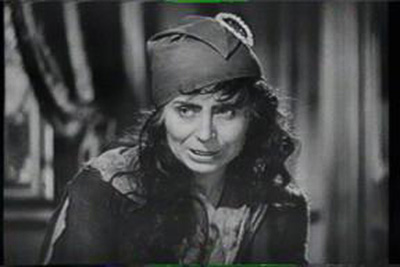
Madame-Defarge2

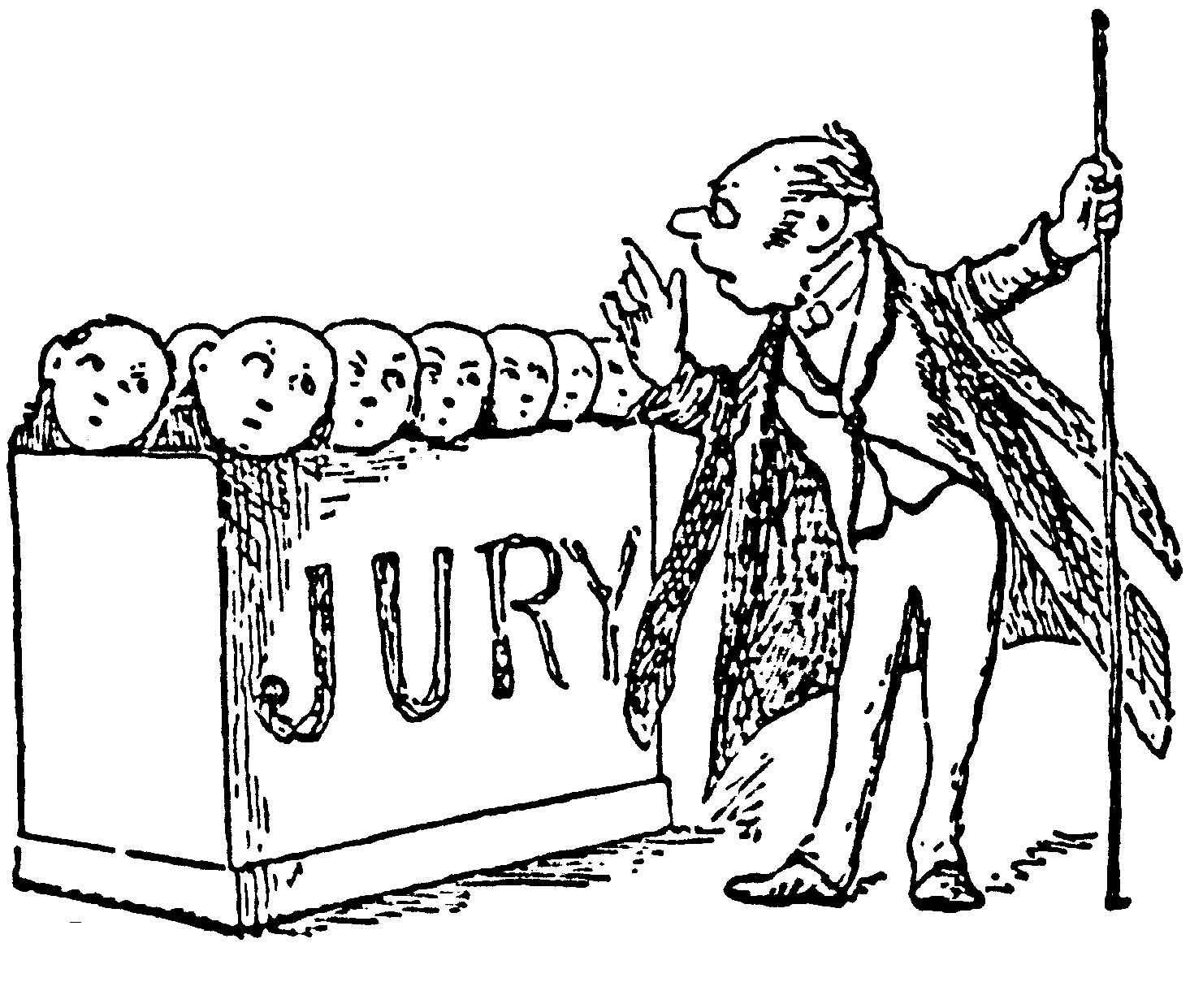
Shown above is the foreman(*) of my so-called grand jury, Madame Defarge. Not her real name, of course, and she might even be a he; I am bound by strong oaths of secrecy:

But that I am forbid
To tell the secrets of my prison house,
I could a tale unfold whose lightest word
Would harrow up thy soul, freeze thy young blood,
Make thy two eyes, like stars, start from their spheres,
Thy knotted and combinèd locks to part
And each particular hair to stand on end,
Like quills upon the fearful porpentine.
But this eternal blazon must not be
To ears of flesh and blood. 

The difference between the original Madame Defarge, and mine, is that the former was on the side of the sansculottes, while mine is definitely on the side of the District Attorney. They do however share a propensity for the guillotine, or at any rate the penitentiary.

This horrible ordeal is nearly over — Monday will be my last day. I’ve had many depressing experiences in life, but this has been one of the few that diminished my faith in human nature.

And I’m not referring here to the defendants, or the DAs or even the cops. There were no, or very few surprises there; the cops and the DAs were what I have long known them to be — despicable but predictable. No, what deeply disappointed me was my fellow jurors, and especially the young ones.

They’re all attractive — well, except for the one with the greasy hair and the bad dandruff and the grating voice, who unfortunately sits right in front of me. With that exception, they’re all personable and clearly quite smart. With no exceptions, they’re utterly brainwashed.

Of course the white kids are much worse in this respect than the black kids. The latter at least have enough mother-wit to be skeptical of police testimony. The white kids swallow it all, hook line and sinker. And they get mad when you suggest any reasons why they shouldn’t.

I wrote a bit earlier about their inability, or unwillingness, to consider facts. They’re also not very happy with logic. For instance:

I’ve noticed a persistent pattern in the charges we’re given. I call it Piling On. For example — a made-up example, I stress, but we heard cases with a family resemblance to this — some dump mope grabs a lady’s handbag, and is arrested thirty seconds later. He still has the handbag, so he gets charged not only with robbery, but with possession of stolen property.

Or a guy gets pulled over for drunk driving. He gets charged not only with drunk driving ‘per se’ — that is, he failed a breathalyzer — but also with common-law drunk driving, because the cop says he could tell the guy was drunk. The common-law statute, of course, antedates breathalyzers and remains on the books, presumably, because you can’t always get a breathalyzer — the driver doesn’t actually have to submit to one, in fact.

Now I tried to explain my dislike of this pattern to my fellow jurors, and this made me even more unpopular than I had been before:

“They’re different laws!”

“It’s two separate charges!”

“He could have thrown the handbag away! But he kept it!”

I appealed to the obvious intent of the statutes, and the idea that they might have actually been intended to cover different things, and that’s why they’re different statutes (e.g., a person being a fence rather than a burglar).

This literally produced howls of execration, taunts about my inadequate education(**) and so on. The idea that we might actually exercise some judgement was, it seemed, quite upsetting and unthinkable.

I actually like most of my fellow jurors, apart from Dandruff, who annoys me immensely, and Madame Defarge, who I think may be the reincarnation of Albert Shanker. Met in any other setting, they would be people I would like to befriend and see more of.

But in this setting they don’t show to advantage. I suppose it’s a testament to the efficacy of indoctrination. It has not escaped my notice that the best-educated are the most slavish.

—————-
(*) I simply will not say forewoman, or foreperson; that kind of thing makes my skin crawl.

(**) To wit, my lack of a law degree. Life’s little ironies.

Marriage

gay_marriage_great2ff3707c-8085-4bdf-8eb9-fe31363715f7

You’d have to be a real Grinch to disapprove, wouldn’t you?

Naturally I was glad to hear that the insane Supreme Court was nevertheless sane enough to overturn the infamous, and intensely insane, Defense Of Marriage Act. This makes a real difference in the lives of many people that I know and like, and countless others I don’t.

There’s no downside; it’s all good. Each of the Js who voted to overturn gets a good thousand years off his or her innumerable millennia in Purgatory.

More on this topic later but perhaps that will do for today. The gift horse came from a very disreputable stable, but a horse is a horse, of course, of course.

Heh. Heh. Heh.

Edward-Snowden-pose

It’s funny, you know — heroes are not all that rare. I mean real heroes, not cops and rifraff like that.

Bradley Manning, Julian Assange, Edward Snowden. Everybody says they’re kind of odd, but in that case, I’ll take odd over normal every time.

I heard early this morning that the Dragon and the Bear had collaborated to stick a finger in Uncle’s eye,(*) so that Snowden could go to Ecuador or Venezuela via… Cuba!

Every aspect of this story gave me deep, deep joy. I don’t even know which part is best, though the Cuba connection is certainly a strong contender.

I can just hear the rich vodka-stoked laughter in the Kremlin, and the discreetly muted titterings in the Forbidden City. And Uncle, the Great And Terrible, looks like a monkey. It really doesn’t get a whole lot better than this.

————
(*) A surprisingly accurate characterization from the unspeakable and usually unreliable Chuck Schumer, who seems to have been reduced to gnawing on the furniture by this development.

Kick the cant…

http://www.dreamstime.com/-image21335810

… down the road, that is, in the current politico-wonk phrase. No reference intended to the venerable children’s game.

Early on in our grand jury experience, some of us raised questions about procedure. So a higher-up in the DA’s office was brought in — I don’t know exactly what her title was, but she was clearly a person with more stripes or stars on her shoulder than the drudging, droning dogsbodies we deal with ordinarily. Was she a major? A light colonel? A full colonel? I don’t actually know. I would like to think we got the attention of a brigadier, at least, so I will call her General Blondie.

This eloquent lady painted a glowing picture of the protections available to the defendant at trial — the possibility of excluding evidence improperly obtained, the cross-examination of witnesses — all the stuff we know and love about courtroom drama. The message was that we shouldn’t worry our pretty little heads too much about indicting somebody, since all these wonderful protections would come into play as soon as Atticus Finch showed up for the defense.

But of course this is a fairy tale, as we all know. To repeat comments made here earlier, something like 98% of criminal charges are plea-bargained and never go to trial. Nobody ever examines the admissibility of the evidence; nobody ever cross-examines those inveterate lying dogs, the police.

(They even have, I’m told, a characteristically blunt and candid term for what they do on the stand: ‘testilying’.)

A Member Of The Grand Jury — this is the phrase used when an ADA grudgingly deigns to pass on a witness question from one of us — asked General Blondie what percentage of cases were plea-bargained.

It was wonderful to see the General’s response to this piece of gross impertinence. She flashed that automatic tight mirthless smile that deeply aggressive but very repressed people exhibit when they’re really furious. ‘That is no concern of yours,’ she said, ‘and I am not going to answer it.’

Should have given the game away, to anybody with ears to hear, right?

But the fairy tale had its effect on many of my colleagues. Over and over, now, I hear the argument that hey, it might have happened the way the DA said it did, so let’s indict — let’s kick the can along to a trial jury which will do all this wonderful sifting and scrutiny of the evidence.

It does absolutely no good to remind them that no such jury will ever sit; no such sifting and scrutiny will ever be done. They simply can’t, or won’t, take it in. Some of them have even said, in so many words, that we are not allowed to think about that.

I wanna be a non-juror

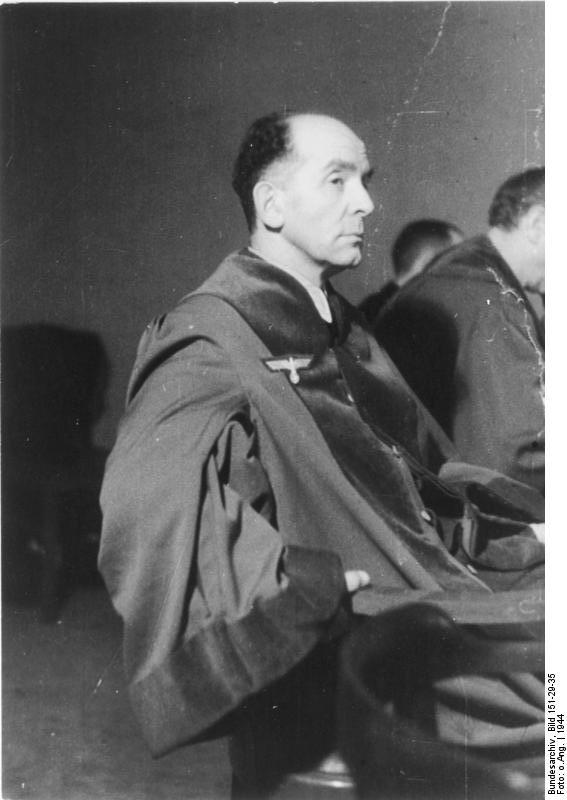
Roland Freisler, a famous and highly effective DA

Roland Freisler, a famous and highly effective DA

The gent shown above got a lot of convictions. I am surprised that his portrait does not hang, as an encouragement to up-and-coming assistant DAs, in the offices of Cyrus Vance, Junior, son of Jimmy Carter’s secretary of state. Junior is now the Manhattan DA, having replaced the unspeakable and nearly perennial Robert Morgenthau (who of course was the son of FDR’s wartime secretary of the treasury). Seems to be kind of a Duchy Of Cambridge, the DA’s office.

I am now, being a grand juror in New York County, an unpaid employee of the honorable Mr Vance, or so his paid understrappers seem to think. These ADAs are a very arrogant and unamiable bunch, for the most part, though there have been one or two exceptions.

I never liked prosecutors, and after four days on a grand jury, I like ’em even less.

They hate it that we common folk have any say at all in the indictment process. They do everything in their power to restrict our access to information. They get furious — they start to slam books down on the table, and use intemperate language — if we ask questions they don’t like. They insist — though I don’t believe they have any legal basis for this — that we whisper our questions for the witness in their ear, and then they decide whether to ask them or not. They refuse to pass on questions whose answers might tend to be exculpatory.

I asked such a question the other day, and the result was Beckettian: the ADA stood speechless for a good minute, then scurried away and consulted with another ADA. Their conversation took another four or five minutes. Meanwhile the witness is sitting there, looking like an egg slowly frying on a hot sidewalk.

Finally the ADA asked a question, but it was not the question I had asked, and the way it was phrased gave the witness a very clear signal as to what the answer should be.

This happens over and over. It is invading my dreams. Kafka, thou shouldst be living at this hour.

What’s even more interesting is my fellow common folks’ reaction to all this insanity. But that’s a subject for another post.

Jury duty

jury
In New York, they get you sooner or later. So I’m on jury duty. What’s worse, in one way: it’s *grand* jury — a misnomer if ever there was one — and it lasts two weeks.

It’s all supposed to be super-secret of course, but I will no doubt end up writing sonmething of a general nature about it, without of course revealing any of the highly sensitive super-secret details of any individual cases.

I always used to disapprove of grand juries, because of the compelled testimony and the secrecy. But just yesterday another penny dropped:

About 98% of criminal cases in my town never go to trial. There’s no petit jury, like in all those wonderful movies , with rules of evidence and cross-examination. Nope. Nearly all cases are plea-bargained.

The plea-bargaining strategy is very clear in the material we get from the DA: six or seven different redundant and duplicative charges for one more or less bad act, for example.

This is all meant to scare the defendant so much that he will take a plea, whether he’s guilty or innocent. The assistant DA scores a point and his boss is happy, and the defendant goes upstate, which makes these desperate little towns, where prisons are the main employers, happy also. Or at least as happy as you can be if incarceration is the local industry.

So my little not-so-grand jury is in fact the only jury of his peers that 98% of our defendants will ever face.

Teaser: Most of my colleagues do not want to hear this.

More anon.

Swarme of sectaries

swarme-of-sectaries

My old mailing-list sparring partner Louis Proyect has written a mighty 3,300-word essay, on Counterpunch, about the history and politics of International Socialist Organization, a boutique Trotskyite sect. I suppose that works out to some dozen words per member.

Have to admit I couldn’t read the whole thing, since the topic is utterly stupefying to me, but in skimming it I did find a number of amusing turns of phrase and characterizations. I certainly recommend it to anybody who is able to take more of an interest than I can do in these battles of the frogs and mice.

Louis certainly has a vast capacity for this kind of thing; he must have written tens, perhaps hundreds, of thousands of words about the SWP and his experiences in it. I don’t quite know whether to find this admirable or appalling.

Whence this zeal for the finer points? Am I mistaken in believing that Trotskyites generally exhibit more of it than other elements of the Left? If so, why?

Horrible Bill

horribleBill

The fella on the left — Father Of The Year, perhaps, and I pity the Kids Of The Year if so — looks rather aghast, as well he might. The quondam Butcher of the Balkans, front and center, his famous Edsel nose gleaming like Rudolph’s, is very impatient with Obie for not dropping enough bombs. On Syria, forsooth.

“You just think how lame you’d be… suppose I had let a million people, two million people be refugees out of Kosovo, a couple hundred thousand people die, and they say, ‘You could have stopped this by dropping a few bombs. Why didn’t you do it?’ And I say, ‘because the House of Representatives voted 75% against it?’ You look like a total wuss, and you would be.”

This is all, of course, marching orders from the Israel lobby. But the terms in which it’s expressed may perhaps shed an interesting light on the Big Dogface’s own inner demons.

On Middle East matters, Clinton was always more or less a pilotless drone run by remote control from AIPAC headquarters, but as long as he was getting his BJs in the Oval Office, rather than Chappaqua, there were some countervailing forces operating on him. Now that he and his Better Half are both out of office, their inner Zionist has erupted like Krakatoa.

This is generally true of Democratic Party politicians. The Republicans are fairly obsequious to the Lobby too — the most recent Bush seems to have learned a thing or two from his dad’s unhappy deviations from the Lobby line — but if there is one area where the Democrats beat the Republicans by a country mile, it’s in shameless servility to Fort Zion.