Election junkies

Facebook is, more or less, a pestilence, but it has its uses. It makes you aware of truly horrible developments a week or two before you would otherwise have found them out.

The latest disturbing gut-rumble among my Facebook ‘friends’ is… 2016. Yes, that’s right. The last sour comedy is barely over and people are looking forward, looking forward, across four years of actual human life, to the next content-free shadow-play in that long-running sitcom, American Democracy.

Bad enough, eh? But what makes it worse is that people are now trying to talk themselves into liking Hillary Clinton. Obie is like, sooo 2012. Been there, done that. Twice.

Worse yet, the effort is apparently succeeding. All it takes for these folks is that you’re not John Boehner.

I can sorta see it. Up to a point. I always found her intensely attractive, in a purely personal way, and now that she’s not trying to look young any more she’s even more appealing. And of course there’s no denying that she’s more intelligent, and has more personality, than the entire US Senate put together. There’s a reason why she has never held elective office(*): personality is now an absolute impediment.

But as I may have observed before, intelligence is overrated. And even personality only goes so far.

She’s a mad-dog Zionist. She gave us the last-but-one massive giveaway to the insurance companies, before Obie’s more recent effort. She’s been a happy participant in the current terrorist administration’s assassination program.

But oh well, she’s not John Boehner. If you care about differences at that level of detail, then hey, knock yourself out. Whatever gets you through the night.

——————–

(*) A gross blunder on my part; curious that I had forgotten. See the comments.

Surprise, surprise

(Who can name the illustrious statesman shown above, a longtime member of the self-proclaimed ‘greatest deliberative body in the world’?)

The dear people at The Nation magazine are shocked and dismayed at the failure of filibuster ‘reform’ — a fine phrase, as who should say ‘burglary reform’ or ‘slavery reform’.

The piece linked above, by a rather alarmingly bright-eyed Junior Woodchuck named George Zornick, is entitled ‘There was no reason to surrender in filibuster reform.’ Well then, George, if there was no reason, why did it happen?

Admittedly, all the reasons given, which poor George capably eviscerates, are unconvincing. But of course this shows that the real reason can’t be acknowledged.

I think it’s quite simple. Every senator in that contemptible body has a vested interest in the filibuster, because it increases the price he can charge for a vote. (I don’t mean in the literal sense, in most cases, of course; though the quid pro quo is often stark enough.)

It’s a question of supply and demand. If getting something through the Senate takes sixty votes instead of fifty, the marginal vote becomes that much more valuable.

Econ 101.

Colley Cibber redivivus

dunciad-cropped


Of course it’s quite unfair to compare Richard Blanco, the perpetrator of yesterday’s unspeakably horrible inaugural poem, to Colley Cibber. The latter may have been a bit ridiculous at times, but he had real gifts and he wrote a terrific book, while Blanco plumbed abysses of tedious, insipid, tin-eared, maudlin bathos hitherto unexplored by humankind.

Who says there’s no such thing as progress? In the art of sinking we certainly have the 18th century beat all hollow.

Blanco’s vast slab of Heepery is very long, longer than the average ode of Pindar, and composed entirely of infelicities that howl like timber wolves with the toothache. In such a Boschian garden of misshapen delights, it’s hard to pick a favorite. But here’s a contender:

“finishing one more report
for the boss on time, stitching another wound
or uniform, the first brush stroke on a portrait,
or the last floor on the Freedom Tower
jutting into a sky that yields to our resilience.”

Hey girl. Yield to mah jutting resilience. You won’t be sorry. And yes, I finished the report for the boss, so don’t worry your pretty little head about that.

I should really stop there — in a sense, the thing speaks for itself, describes itself, exhibits the poor fool who wrote it and the insensate philistines who chose it, and it sheds a pitiless glare on all the besotted lotos-eaters  who were so carried away by the brummagem grandeur of the great occasion that they thought they liked it. (The last-mentioned group should go into rehab.)

And yet I can’t stop gnawing at it. It’s just so spectacularly, emblematically, diagnostically bad, like some ominous elevated enzyme level, on the checkup you should have had six months ago. A thing that bad has a strong gravitational field: it’s so bad that you want to read into it everything that’s bad about Amurrica.

Well, liberal Amurrica, anyway. Blanco has a poetic tic closely aligned with one of liberalism’s political tics: he thinks it’s enough to mention things. The giddy Obamaphiles dribbling all over Facebook about Obie’s characteristically empty speech were ecstatic that he had mentioned gay people. Nunc dimittis! The president said nice things about gay people!  In the beginning was the word — and it pretty much ends there, too, if Obie’s previous form is any guide.

Blanco’s poiesis operates the same way: light, color, stained glass windows. Check. On to the next thing that needs mentioning. Like for instance:

the empty desks of twenty children marked absent

Ugh. Perhaps there are places where those children are more missed than at their ‘desks’? One hopes so. But Blanco, clearly a good student himself, thinks of the empty desks.

Those poor kids. They will never have the opportunity to get an MFA in ‘creative writing’. It would be heartless, of course, to say ‘just as well’; but then, anybody who could weep over the empty desks has a heart of stone. To paraphrase another — and much better — poet.

Curses! Tinfoiled again!

A lot of Pwogs seem to be very upset and alarmed by the sudden upsurge of conspiracy theories about the Sandy Hook school massacre. Alternet worriedly notes:

thanks to the Internet, the media can no longer suffocate a smoldering conspiracy theory by ignoring it.


Golly, isn’t that a shame: we can’t depend on Walter Cronkite any more to tell us what’s thinkable and what’s not. People can share crazy notions with each other. They might make up their own minds, unguided by expert opinion.

Personally, I’m always glad to see people being skeptical about what the Teevee and the Gummint tell ’em. Of course, most ideas are bad ideas, and so it’s not surprising that when people start thinking for themselves, a lot of the stuff they come up with will be dogshit. But a lot of elite ideas are dogshit too; just look at sociobiology.

The dismay of the Pwogs reveals the fundamentally managerial-totalitarian-therapeutic mentality of liberalism: We must stop people thinking this stuff. It’s crazy.

Well, of course it’s crazy. We live in a crazy world, so naturally we think crazy thoughts. The tinfoilers recognize the craziness, and deal with it by finding a source for it: the Illuminati or whatever.

The nice thing about the tinfoiler line is that it doesn’t project its own craziness; it doesn’t claim the Illuminati are crazy. Au contraire.  It sees craziness as a project. It credits the Illuminati with a high degree of intelligence and rationality for trying to make us crazy, and keep us that way.

Grosso modo, the tinfoiler approach doesn’t seem a million miles from the truth, though it may give our actual elites a bit too much credit — Illuminati they ain’t.

The Pwog view of the matter is just the opposite: craziness bubbles up from below and some way must be found to keep a lid on it.

Now I personally think the tinfoilers, crazy as they are, might be just a little less crazy than the Pwogs. The tinfoilers live in a  thought-world where a cabal of powerful people are out to get them, which, modulo a bit of detail, sounds to me a lot like the world we actually live in.

But for the Pwogs, we live in a world that’s basically sane and sound, apart from a few necessary policy tweaks — like gun control — and a bit more money spent trying to manufacture another chimerical product that goes by the name ‘mental health’.

Hey, with sanity like this, who needs craziness?


Outliers

On the day of Aaron Swartz’ funeral I was talking to a friend of mine who had known him. My friend was quite indignant (understandably) at the prosecutor’s ‘demented’ ferocity and MIT’s craven compliance with it. But when I ventured the observation that there might be something systematically wrong, he didn’t want to hear it. Prosecutor, or rather persecutor, Carmen Ortiz (shown above — an Obama appointee) was an ‘outlier’, he said.

I don’t think so. This lady didn’t parachute in from somewhere; she came up through the Justice Department in the orthodox way, and she’s done equally demented things before without her boss getting upset about it.

No, it’s pretty clear that this is policy.  My own hypothesis is that poor Brad Manning and Wikileaks drove our overlords so crazy that they’re determined to come down like a ton of bricks on anybody who gets any data they’re not supposed to have.

And of course the recording studios and the movie studios would like to have anybody shot who infringes copyright or even terms of use, and they probably have even more influence with a Democratic administration than they would with a Republican one — which is saying something.

Sure, Ortiz is demented, as my friend observed. But she’s demented in the same way as her boss the attorney general, and his boss the president, and the congress who wrote the book she threw at Aaron Swartz and Tarek Mehanna.

Demented, certainly; an outlier, most certainly not.


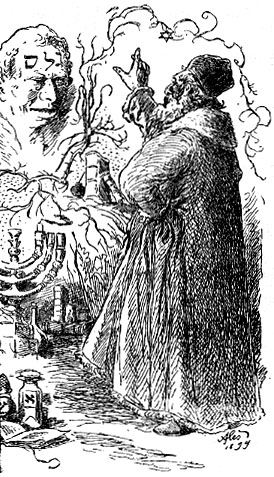
Aaron Swartz, z”l

The news of Aaron Swartz’s death came to me early this morning, appropriately enough, in an email list devoted to an esoteric topic.

I didn’t know Aaron personally, though there is but one degree of separation, and that not a distant one. One feels the wings of Samael, that ancient and distinguished and terrible servant of God, rustling the air about one’s head.

I had been vaguely aware of Aaron’s doings over the years, and greatly approved, of course. Anybody opposed to intellectual-property Fascism is a friend of mine.

I’ve made my living for the last forty years, almost, doing Stupid Computer Tricks. These eager cocky young guys, each quite certain that he’s the smartest guy in the room — gotta love ’em. I was one of ’em, years ago, in a small way, though I never really was the smartest guy in the room, and never even believed I was. Or not for more than a minute or two, anyway.

But they go different ways, these smart young guys. Some of ’em become apparatchiks for Google or Apple or, God help us, Microsoft or Oracle. Others take the path Aaron took, and decide to fight the lords of copyright and their sedulous gofers in the Enforcement Sector.

Those who knew him — I wish I had — say that Aaron was also familiar with the Black Dog: that horrible gloom that settles over some of us from time to time and sucks all the joy out of lives that ought to be full of joy.

Some accounts of his death emphasize this side of the story. Others wonder whether it might have had something to do with the fact that he was facing a long ordeal in the courts, and maybe decades in prison at the end of it, because he ‘stole’ a bunch of mostly dull journal articles from a thing called JSTOR.

JSTOR. Slowly I turned. Step by step, inch by inch…

Aaron couldn’t have taken on a better target. JSTOR owns the online rights to back issues of a lot of academic journals. Now as we all know, most of what gets printed in academic journals is horseshit. Say 99%. But there’s gold in the other 1%, and those of us who take an interest in some arcane question — mensural notation in the fifteenth  century, let’s say — are always pressing our noses against JSTOR’s paywall.

So for us, Aaron was a Robin Hood. A very benign one. We were the poor, for whose sake he was robbing from the rich. Though ‘robbery’ is really not quite right. That is, after all, the language of ‘intellectual property’, an oxymoron if ever there was one.

Nobody could claim that anybody’s livelihood was threatened by opening up JSTOR. There was no downside, really, apart from impairing somebody’s arbitrary sense of proprietorship and control.

But they came down on him like a ton of bricks. MIT (on whose premises he conducted this magnificent stunt) and even JSTOR itself decided to back off, finally: talk about bad publicity. But the mockingly-named US Justice Department wouldn’t let go. Hey, give ’em an inch…

Aaron was undoubtedly a smart guy, and this side of the story has been much emphasized by many of his eulogists: O what a waste! Consider what great things he might have done!

That doesn’t cut much ice with me. There are plenty of smart guys — mute inglorious Miltons who spend their lives writing brilliant Python code for some awful corporation.

What I will miss is his defiant  bloody-mindedness. He’s exhibit A, at the moment, for my long-held belief that The Kids Are Alright.


You go, Lem!

It’s long been a favorite aphorism of mine that a police state is not only run by the police; it’s run for the police. Of course this is an exaggeration, but I think there’s a truth in it.

I happened to use this line the other day on one of my mailing lists — not a Lefty one; this one concerns itself with the classical languages. Somewhat to my surprise, I got a rather tart response that would have been less unexpected from the Lefties:

Not really. It’s run by the elite, using the police as a tool. All states are police states to a greater or lesser extent.

Well, this got me thinking.

At the most fundamental level, the former proposition is certainly true. I’m not so sure about the second. But even the first misses some important detail, I think.

One very striking feature of life in the States (dunno about elsewhere) in recent years has been an appalling hypertrophy of the enforcement and incarceration sectors: there are more and more cops every year, they’re more and more heavily armed, they’re more and more arrogant, overbearing, self-indulgent and unaccountable, they’re more and more intrusive and activist, and more and more they have become an important political force in their own right.

And all this is entirely disproportionate to any underlying need for increased repression on behalf of the US elites. Indeed, the polloi have been remarkably passive and acquiescent in the face of a really brutal campaign of immiseration on the part of the oligoi.

Nor do I think the latter are quivering in their boots at the mere hypothesis of a sansculotte insurrection. If anything, they seem to be giddy with triumph and convinced that the sky’s the limit – or rather, the abyss is the limit. Full speed ahead!

Social phenomena can’t just be ‘read off’ in detail from the underlying laws of large-scale motion. Of course the elites ultimately run the show – until the aforementioned sansculottes show up pulling their tumbrils, and it can’t be too soon for me. But even when the elites’ rule is tranquil and undisputed, there’s a certain internal dialectic in the workings of dominance itself. The instrumentalities of dominance take on a Golem-like life of their own. The tail doesn’t quite end up wagging the dog, but it
can become a lot more tail than the dog really needs.

Another contributor to the thread corrected me on the facts:

Numbers may vary locally, I’m sure, but the stats for the whole USA on FBI.gov don’t bear this out.

It looks like the numbers as a percentage of the population are pretty constant, and even falling a little for the years 2006-2011.

I expect they do vary locally, and even here in NYC what we saw was a long period (late 70s to 2000 or 2001) where the force really ramped up dramatically — from 20,000-odd, IIRC, to 40,000 or so at the peak. It’s slumped a bit since then, and I think it’s around 35,000 now.

That’s just NYPD of course; no idea what the stats look like for the various suburban and ancillary police forces — the Port Authority has its own police, as do the MTA and the TBTA and so on.

It probably varies a lot by neighborhood too. In my fairly well-off neck of the woods, it’s routine to see a dozen or more cops ‘responding’ to some fairly trivial event; one gets the very strong impression that they really don’t have enough to do, except for gratuitously rousting people (‘stop and frisk’), and the preposterous theater of searching knapsacks in the subway.

The reasons for the slump since 2001 or so are variously explained. There do seem to be fewer vocations, for whatever reason. Perhaps Nineleven(tm) had a chilling effect on the ardor of the police recruitment demographic.

Mayor Bloomberg is of course very much a technocrat and it’s also possible that he’s decided the tail is now big enough for this particular dog, though he slathers the force with the usual grovelling flattery that it now feels entitled to expect, as its due, from politicians and the official media.

This is in public, of course, where the liturgies of police worship are obligatory, and the word ‘cop’ can’t be uttered without its usual Homeric epithet ‘hero’. But Bloomie may
have his own secret counsel on the subject.

Of course neither tails nor police departments can grow without limit.

Department of esprit d’escalier: I neglected to ask the classicists whether  anybody knew the time-series stats on the size of the Praetorian Guard, another overgrown  body of thugs in uniform; another tail that got pretty close to wagging the dog, now and then.



For once, the Times gets it right…

… at least, if you read no farther than the headline:

Social Security: It’s Worse Than You Think

Congress and President Obama have pushed through a relatively modest stopgap measure to avoid the “fiscal cliff,” but over the coming years, the United States will confront another huge cliff: Social Security….

For the first time in more than a quarter-century, Social Security ran a deficit in 2010: It spent $49 billion dollars more in benefits than it received in revenues, and drew from its trust funds to cover the shortfall. Those funds — a $2.7 trillion buffer built in anticipation of retiring baby boomers — will be exhausted by 2033, the government currently projects.

Now of course there is no such thing as a ‘Social Security trust fund.’ There’s no Scrooge McDuck money bin where all our derisory widow’s mites have accumulated over  the years. It’s an accountant’s jeu d’esprit: cumulating a certain category of payroll tax revenues and a certain category of government expenditures and subtracting the latter from the former.  So any time people start talking about the solvency of Social Security, it’s time to count the spoons and go long on cat-food futures.

The Times catfooders do not disappoint. They go on and float  some possible approaches to dealing with this entirely imaginary crisis:

tough choices have to be made. One option is to continue raising the retirement age, perhaps to as high as 69 or 70. While the full retirement age is gradually increasing to 67 (for people born in 1960 or later) from 65, this increase is not enough to counterbalance the gains in longevity.

A second option is to increase payroll taxes, for example by taxing wages over $113,700, the current earnings limit. A third is to limit the annual cost-of-living adjustments, possibly by changing how those adjustments are calculated. A fourth is to reduce benefits — for example, by lowering the initial benefits for workers whose lifetime wages are above the national average (currently $43,000 a year). Other choices, in numerous combinations, are possible, too.

One factor that might be considered is new research suggesting that retirement itself, although popular, may reduce life expectancy by breaking lifelong routines and disrupting deep social connections. One might question how much government policy should actively encourage retirement, as opposed to merely making it an option.

When I hear the phrase ‘tough choices,’ I go for my Browning. The choices are going to be made, and they’re going to be tough, but they’re not going to be tough on the people making the choices.

Hey, it’s just a movie

An old pal swept me off the other day to see Tarantino’s blaxploitation spaghetti Western, which I thoroughly enjoyed. I thought the script was extremely witty, and all the performances were sheer delight. I’m so old-school that I think a movie ought to last exactly ninety minutes, not a minute more and not a minute less, but I wasn’t even bothered by the length. It was just a fun-filled boyish romp from start to finish, and hardly — I won’t say never, but hardly — a dull moment.

Spoiler alert: I am going to mention some things that happen in the story. It’s not exactly a suspenseful narrative — everything is telegraphed pretty thoroughly — but people don’t always like to know beforehand, so be warned.

My favorite bit was the proto-Klan guys bitching about their hoods, a scene which must have lasted ten minutes, and should have lasted twenty.  It was really just about all the commentary that Birth Of A Nation needs. That’s the part shown above, though the image doesn’t at all do justice to it. The night riders come galloping in, and of course you think Oh shit, how sinister, and then… but I can’t begin to convey it; it’s all in the writing, and actors who know how to put the lines over; just go see it.

Then there was the wonderful moment when Django guns down the gaping, insipid but not particularly offensive sister of the Leonardo di Caprio character, which is pure sight gag, like Toto falling out of the frame in Palm Beach Story. Hey, you too, beeyotch. In a glaring and deliberately obvious stunt effect, the victim is abruptly yanked backward through a doorway, apparently by the mother of all bungee cords. Anybody who doesn’t laugh at this simply has no susceptibility to slapstick. Do not consort with such folk.

My comrades on the Lefty mailing lists mostly took a much dimmer view, e.g.  “unrelenting tastelessness — exclamatory kitsch — on a subject as loaded, gruesome, and dishonorable as American slavery.” (‘Dishonorable’ in this context is the mother of all anticlimaxes, innit? Speaking of mothers.)

I have to wonder just what these guys expect of a movie: something Spielbergian in its high moral seriousness, but also impeccably Marxist? I don’t think I would go see that movie. I’d approve of the Marxist part, but the Spielbergeoiserie would kill it, for me.

Much of the commentary ended up wondering what ‘point’ Tarantino was trying to make, or what the movie was ‘really about’. (One ingenious contributor suggested it was an allegory about racism in… Hollywood!)

Why do we do this: go to the movies — of all places! — looking for meaning, or instruction, or edification, or political analysis? That’s a pretty sad commentary on us, isn’t it? Don’t we have better sources for all those things?